How Modern Aluminum Casting Foundries Create High-Performance Components
Contemporary aluminum casting foundries play an essential role in producing high-performance components. They use advanced methods like die casting and permanent mold casting to reach remarkable precision. This focus on accuracy confirms that parts satisfy the demanding requirements of industries such as automotive and aerospace. However, the evolution of technology and materials has introduced new challenges and opportunities. Understanding these dynamics is essential for recognizing the future of aluminum casting and its impact on performance.
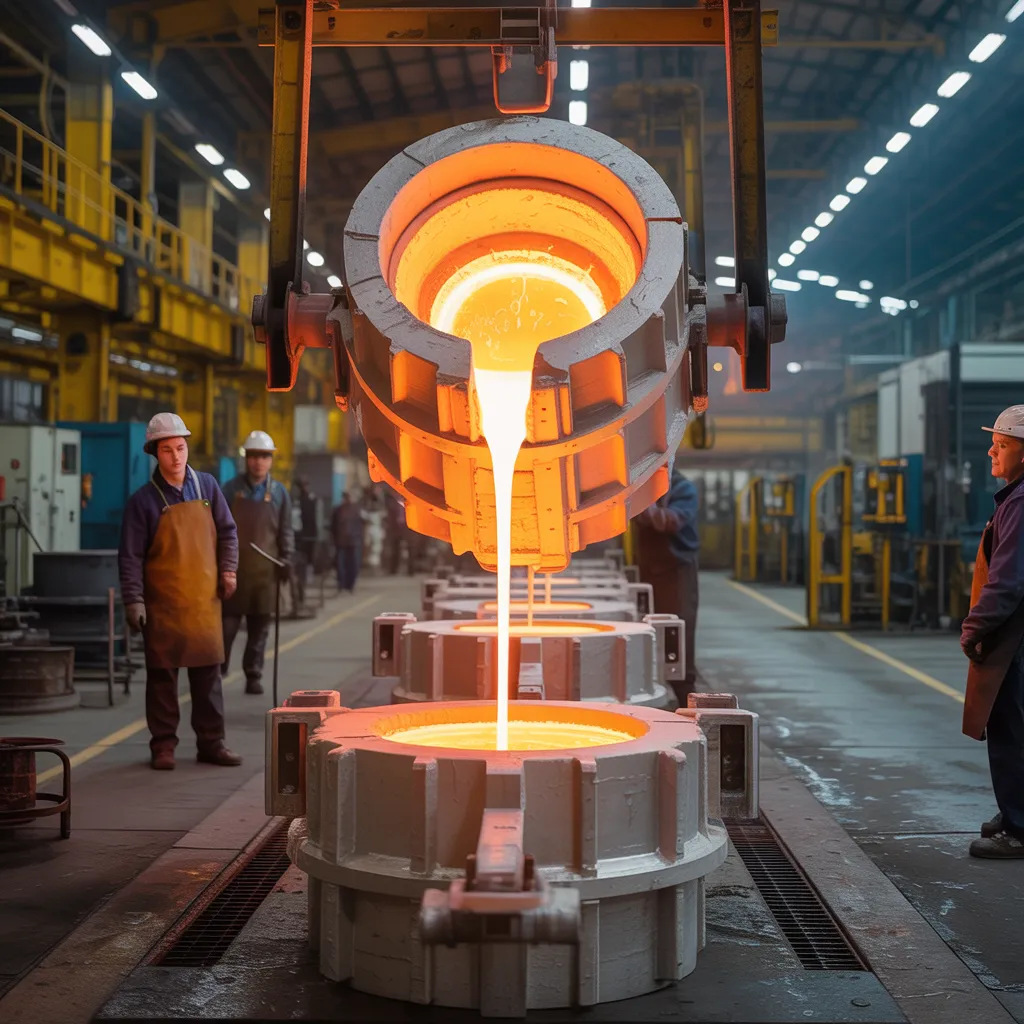
Aluminium Casting Methods Over the Years
Throughout the evolution of aluminum casting, numerous methods have surfaced, each reflecting progress in both technology and materials. Traditional sand casting, previously the dominant technique, has gradually been supplemented by increasingly accurate methods such as die casting and permanent mold casting. Sand casting, recognized for its adaptability, enables the development of complex shapes but is sometimes restricted by surface finish quality. On the other hand, die casting uses high pressure to force molten aluminum into molds, producing components with exceptional dimensional accuracy and surface integrity. Permanent mold casting, which employs reusable molds, offers a middle ground, equilibrating the advantages of both sand and die casting. The implementation of sophisticated alloys and automation technologies has continually refined these methods, producing increased efficiency and lower waste. Each technique serves specific uses across multiple sectors, showcasing the flexibility of aluminum casting in meeting modern manufacturing needs.
Performance-Boosting Characteristics of Aluminum
The performance-improving qualities of aluminum make it a preferred choice in numerous industrial applications. Its exceptional strength-to-weight ratio enables the creation of lightweight components without diminishing structural integrity, essential for industries such as automotive and aerospace. Furthermore, aluminum exhibits remarkable corrosion resistance, which prolongs the lifespan of components exposed to harsh environments. Its thermal and electrical conductivity also increases its utility, making it ideal for applications where optimal heat dissipation or electrical performance is vital.
Furthermore, aluminum is remarkably malleable, facilitating intricate designs and complex shapes in casting processes, which can lead to more efficient performance in finished products. The potential to alloy aluminum with other metals also enables the customization of properties, tailoring them for specific applications. All in all, these performance-enhancing characteristics establish aluminum as a versatile and valuable material in the manufacturing of high-performance components across diverse industries.
How Innovative Technologies Are Altering Foundry Operations
Progress in technology are reshaping foundry operations, substantially increasing efficiency and precision in aluminum casting processes. Automation and robotics have become fundamental, streamlining tasks such as mold handling, pouring, and finishing. These technologies not only cut labor costs but also reduce human error, producing higher consistency in production.
Moreover, the integration of sophisticated computer modeling and simulation tools empowers foundries to anticipate casting behaviors and optimize designs ahead of physical production commences. This predictive capability enhances material utilization and decreases scrap rates.
Additionally, the introduction of smart sensors and IoT devices enables real-time monitoring of equipment and casting conditions, facilitating proactive maintenance and process adjustments. Therefore, foundries can reach higher production rates while maintaining stringent quality standards. All in all, these innovations are transforming traditional aluminum casting methods, creating opportunities for resource more agile and responsive manufacturing environments.
Quality Management Methods in Aluminium Casting
Guaranteeing superior results in aluminum casting demands stringent quality assurance practices throughout the fabrication process. Foundries utilize structured inspections at multiple stages, commencing with raw material confirmation to verify compliance with specifications. During melting and pouring, temperature control is vital; deviations can lead to defects in the final product.
Non-destructive testing techniques, like ultrasonic and radiographic inspections, are utilized to locate internal flaws without affecting the integrity of the components. Additionally, dimensional inspections are carried out to ensure that castings satisfy precise tolerances, which is crucial for high-performance applications.
Record-keeping plays a critical role in quality assurance; keeping detailed records of inspections and tests assists in tracing defects back to their sources. Personnel training is similarly essential, as skilled operators can substantially affect the quality of casting. By maintaining these thorough quality assurance practices, aluminum casting foundries enhance the reliability and performance of their components, verifying they meet industry standards.
Rising Trends in Aluminium Component Design
Quality assurance practices in aluminum casting have laid a robust foundation for the evolution of aluminum component design. As technology develops, designers are increasingly choosing lightweight, high-strength materials that enhance performance while reducing weight. Advancements in casting techniques, such as 3D printing and additive manufacturing, are facilitating more intricate designs that were previously unattainable. This shift enables the creation of complex geometries that optimize airflow and thermal management, particularly in vehicle and aircraft applications.
Furthermore, there is a rising trend toward sustainability, with a focus on reusing aluminum and lowering waste in the production process. Designers are also giving priority to functionality, including features that increase durability and resistance to corrosion. Overall, these emerging trends reflect a commitment to not only satisfy performance standards but also address environmental concerns, influencing the future of aluminum component design.
Common Questions
Which Industries Mainly Utilize Aluminum Casting Components?
Aluminum casting elements are predominantly applied in the aerospace, automotive, electronics, and construction sectors. These industries prize aluminum's lightweight characteristics, durability, and resistance to corrosion, making it critical for producing superior-quality components and products.
How Might Aluminum Casting Compare to Other Materials in Performance Metrics?
Aluminum casting provides outstanding strength-to-weight ratios and resistance to corrosion compared to materials like steel and plastic. Its low weight characteristics boosts performance in aerospace and automotive applications, making it a preferred choice for performance-critical components.
What Safety Procedures Are Followed in Aluminum Casting Foundries?
Aluminum casting foundries implement various safety measures, incorporating personal protective equipment for workers, ventilation systems to handle fumes, routine equipment maintenance, comprehensive safety instruction, and conformity to industry regulations to ensure a safe working environment.
How Can Environmental Regulations Impact Aluminum Casting Processes?
Environmental standards force aluminum casting foundries to embrace environmentally friendly technologies, cut down on emissions, and control waste appropriately. Following these requirements typically causes increased operational costs but fosters innovation and sustainability within the industry.
What Are the Standard Costs Related to Aluminum Casting?
Average costs connected to aluminum casting vary widely, commonly ranging from $2 to $10 per pound, affected by factors including material quality, design complexity, production volume, and finishing requirements, affecting overall project budgets considerably.